Stop the Clock, Start the Argument: Why Instant Replay Is Breaking More Than It Fixes
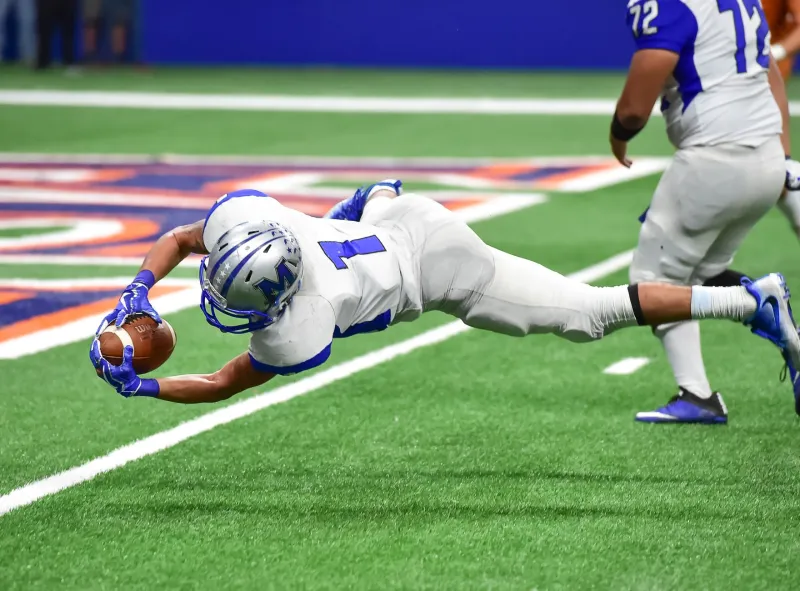
There's a moment every sports fan knows too well. The play happens. The referee makes the call. Then somebody in a headset somewhere decides to slow the footage down to a crawl, zoom in until individual pixels become the subject of debate, and announce — after three agonizing minutes — a decision that somehow manages to satisfy absolutely nobody. Replay technology was sold to us as the solution. What we got instead was a new problem wearing a lab coat.
Instant replay is everywhere now. The NBA has its Replay Center in Secaucus. The NFL has its booth reviews and challenge flags. MLB introduced robot-assisted calls. College football has an entire review protocol that can stop a stadium mid-celebration. The promise was always the same: we have the technology, so let's use it to get things right. Sounds reasonable. In practice? It's become one of the most divisive forces in modern sports.
The Frame That Changes Everything — Or Does It?
Here's where it gets genuinely maddening. Replay reviews are supposed to remove subjectivity from officiating. But what actually happens is that subjectivity just moves upstream. Now instead of arguing about what a referee saw in real time, we're arguing about which frame of video is definitive, which camera angle is authoritative, and what exactly the rulebook means when it says a player must maintain "possession through the ground."
The NFL's catch rule saga is probably the most notorious example in recent American sports memory. For years, fans watched what looked like completely normal football catches get overturned on review because some aspect of the receiver's body hitting the turf caused the ball to shift. The plays looked like catches to everyone in the stadium, everyone watching at home, and often to the players themselves. But freeze the frame at exactly the right microsecond and suddenly it's incomplete. The rule eventually got revised, but the damage was done — people had lost trust in the review system's ability to reflect the spirit of the game.
The NBA isn't immune either. Late-game reviews in close playoff situations have produced some genuinely baffling results. Officials zooming into footage to determine whether a ball grazed a fingertip with 0.4 seconds left, reversing a call that sends a team to the free throw line, only to have the resulting possesion feel more like a technicality than justice. The game stops. The crowd deflates. And the outcome often feels less earned, not more.
Different Leagues, Different Philosophies, Same Frustration
What makes this even messier is that every major American sports league has developed its own replay culture, and they don't agree on much.
The NFL leans into the challenge system, putting some of the decision-making burden on coaches. That creates its own layer of strategy — burning challenges too early, saving them for the wrong moment — but it also means that plenty of reviewable plays never actually get reviewed because a coach didn't throw the flag. The league also reserves certain call types as non-reviewable, which feels arbitrary to fans who know the cameras caught everything.
MLB went a different direction with its challenge system, and for a while it worked reasonably well for bang-bang plays at first base. But the league's broader push toward automated ball-strike technology has opened a completely different can of worms about whether removing human judgment entirely is actually what fans want from a baseball game.
The NBA's Replay Center operates independently of the on-court officials, which creates this odd dynamic where a call gets made on the floor and then effectively appealed to a room in New Jersey in real time. It's efficient in some ways. But it also creates a strange disconnection between what's happening on the court and who's actually deciding the outcome.
Soccer — the world's most popular sport — resisted replay for decades, and when VAR finally arrived in top competitions, the backlash was immediate and fierce. American fans watching Champions League or Premier League games got a front-row seat to a sport reckoning with the same tensions: accuracy versus flow, technology versus instinct.
The Accuracy Illusion
Here's the part nobody wants to admit: replay doesn't actually guarantee accuracy. It guarantees a different kind of uncertainty.
Video footage has limits. Camera placement determines what gets captured clearly and what doesn't. Frame rates affect what's visible at key moments. And the human beings operating the review system still have to interpret what they see. You haven't removed judgment from the equation — you've just added equipment to it.
There's also the question of what "correct" even means in a sport played by human beings in real time. A foul that looks borderline at full speed but appears obvious when slowed to 10% of real time may not actually represent what happened in the flow of the game. Physics gets weird at that scale. Bodies in motion look different frame by frame than they do as continuous movement. Replay can technically show you more information while simultaneously showing you less of what actually occurred.
What the Game Actually Costs
Beyond the philosophical debate, there's a practical cost that doesn't get discussed enough: momentum. Sports run on it. Fans feel it. Players feed off it. And nothing kills momentum like a three-minute stoppage while officials huddle around a monitor.
Ask any season-ticket holder what it feels like to watch a go-ahead basket get waved off after a review, only to see the original call stand after all. The crowd goes through anger, false hope, and then a weird deflated relief that never quite recaptures the energy of the original moment. The game has been interrupted, and you can't get that back.
The irony is that the calls replay gets "right" often feel less satisfying than the wrong calls it prevents. Nobody remembers the play that got correctly overturned. Everybody remembers the review that dragged on forever and ended in confusion.
Rolling Toward a Better Answer
None of this means replay should be scrapped entirely. Getting obvious calls right matters. Protecting athletes from consequences of clear officiating errors is legitimate and important. The goal was never wrong — the execution just hasn't caught up to the ambition.
What leagues need to figure out is where the line is between using technology to correct genuine errors and using it to relitigate every close call until the game loses its pulse. Not every play needs to be reviewed. Not every angle needs to be consulted. And sometimes the most honest answer is that the play was too close to call definitively, which means the original call stands — and that's okay.
Fans can handle imperfection. What they struggle with is the illusion of perfection that takes forever and still leaves everyone arguing. Until leagues find that balance, instant replay will keep doing exactly what it was supposed to prevent: making the officials the story instead of the athletes.


