November's Trophy Nobody Argues About: The NBA Cup Still Can't Buy Real Stakes
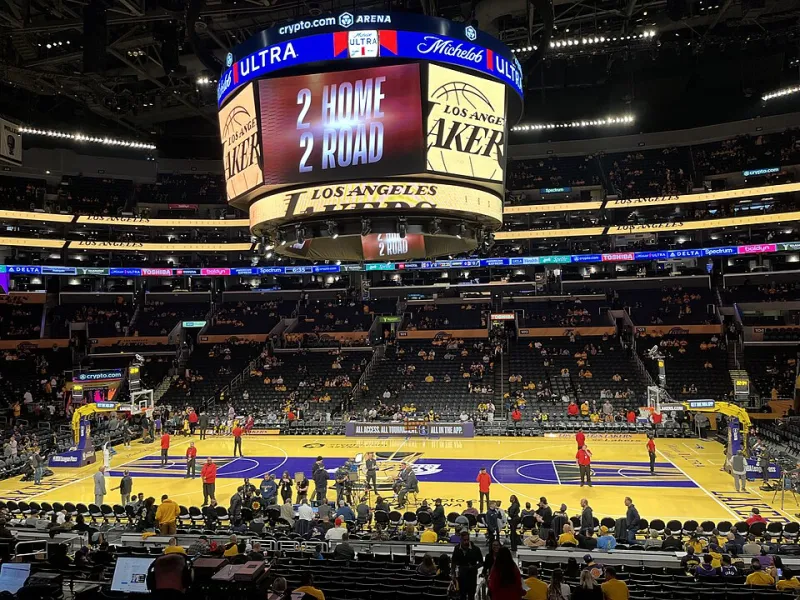
Photo: Troutfarm27, CC BY-SA 4.0, via Wikimedia Commons
Every November, the NBA puts on a tournament and every November, the discourse does the same thing. Night one: "the courts are hideous." Night two: "actually the players seem to care?" Group stage: "some of these games are legitimately good." Semifinal week in Las Vegas: something about the format. And then, sometime in mid-December, the whole thing evaporates from the conversation and we go back to arguing about load management.
That's not a failure of basketball. That's a failure of architecture.
The Product Is Fine. The Problem Is the Stakes.
Here's the thing that gets lost: the NBA Cup games are, on average, better than regular-season games. Not dramatically — but a November game with something attached to it plays a little harder than the same game in January with nothing attached at all. Players contest more shots. Coaches call fewer "let's just get to the plane" lineups. The intensity is real, at least until the group stage math starts getting weird.
But intensity isn't stakes. Stakes are what happens to you when you lose. And when you lose an NBA Cup group game, what happens is that you play the same 82-game schedule you were always going to play, with one fewer night of prize money to think about.
The NBA has tried to solve this every year since the tournament debuted. Bigger per-player payouts. Tiebreakers that hinge on point differential, which is the most creatively cursed rule in the sport and produces at least one game every year where somebody's up 30 and still fouling. Nothing has fixed the core issue: a midseason tournament that doesn't affect playoff seeding is a bonus round. Bonus rounds are fun. They're not important.
Effort Is a Currency Nobody Can Audit
There's a reason the league leans so hard on the effort conversation — it's the only thing they can actually point to. You can't prove a game matters, but you can point at a guy diving for a loose ball in November and say, see, they care.
And they do. Sort of. The problem is that effort in an NBA game is not a binary. Nobody's out there actively trying to lose. The variable is the last five percent — closing out on a corner three when you're up 14, fighting through a screen in the third quarter of a back-to-back, contesting a shot instead of saving your legs for the fourth.
That last five percent is where the Cup lives. And it's also exactly the five percent that scheduling, travel, and the general grind of a season determine more than any trophy ever will. You cannot build sustained meaning on something that shows up only when the legs are fresh.
The Schedule Tax Is Real and It's Not Being Paid by Everyone
The Cup quietly adds games. Not many — but enough to matter. The tournament runs concurrent with the regular season, so the teams that advance play extra high-intensity games in December against opponents who are resting. Vegas week is a road trip for four teams and a television product for everyone else.
Now flip it. Some teams get eliminated in the group stage and get two clean weeks of ordinary basketball — no tournament pressure, no extra travel, no showcase environment. Teams in the middle of a rebuild would probably rather have that than a trophy. And teams with title aspirations have to weigh the risk of a December injury in a game that confers a cash prize on players and second-round draft positioning on nobody.
That asymmetry never gets discussed because it doesn't produce a highlight. But it's the thing that determines whether a coach secretly hopes his team bows out early.
The Courts Are Trying to Tell Us Something
Every year the league rolls out increasingly aggressive floor designs for tournament games, and every year half the internet reacts like they've been personally insulted. This is more revealing than it looks.
The NBA is spending real design money and broadcast time trying to convince you that a specific November game is different. That's what a tournament does when it doesn't have natural history — it manufactures atmosphere. Color-coded floors and a separate trophy and a distinct logo package are all signals pointing at a thing and saying, this is an event. Believe it.
You can assemble atmosphere. You cannot assemble consequence. Fans aren't stupid about this. They know a game is important because of what follows it, not because of what's painted underneath it.
What Would Actually Make It Matter
There are a handful of structural levers the league could pull, and none of them are a secret. Give the winner a guaranteed playoff berth — impossible in the NBA's format, but it's the only version of this that would truly bite. Tilt a tiebreaker meaningfully, not cosmetically. Attach a first-round home-court advantage to the champion, or at minimum a seeding bump that could realistically move a seven-seed into the six. Anything that changes what April looks like.
Without that, we're left with a tournament whose best possible outcome is "that was a fun few nights in December." Which is honestly fine. Fun nights are good. The league has built a genuinely pleasant interlude in the middle of the calendar, and in a season that runs from October to June, pleasant interludes have value.
But let's stop pretending it's more than that. The NBA Cup isn't broken. It's just a November novelty in a league full of people who are paid to pretend November matters. Until winning it buys something real, that's the ceiling — and it's not moving.