Whistled Out: How the Ref Lottery Is Quietly Deciding Who Advances in the Playoffs
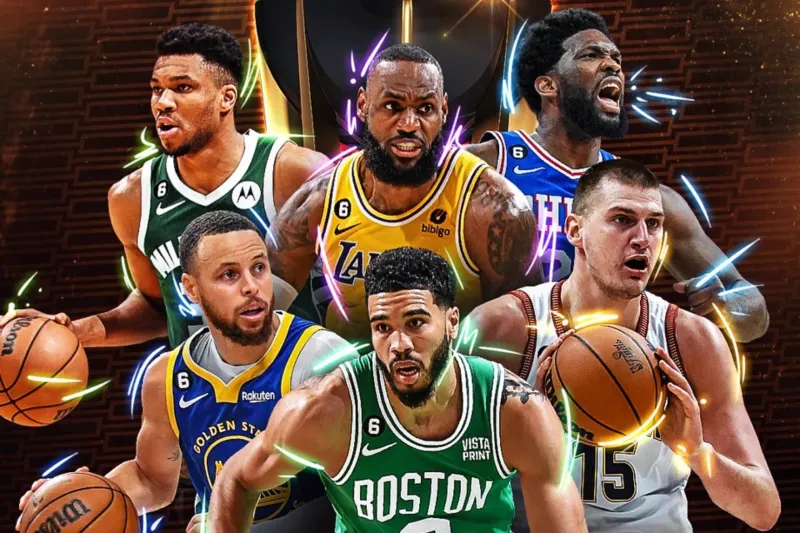
Photo: NBA referee calling foul playoff game, via e00-marca.uecdn.es
Every spring, the same conversation bubbles up in barbershops, sports bars, and group chats from coast to coast. Someone's team just lost a close playoff game, and the whistle — or the absence of one — is getting the blame. Fans chalk it up to paranoia. Analysts pivot to efficiency metrics. But underneath all the noise, there's a real and uncomfortable question worth asking: are referees, through no coordinated conspiracy but through deeply human inconsistency, quietly reshaping who gets to cut down the nets in June?
The short answer? More than the league probably wants to admit.
The Human Variable Nobody Wants to Talk About
Here's the thing about NBA officiating that rarely gets the analytical treatment it deserves. The league has 68 full-time referees, each carrying their own tendencies, thresholds, and unconscious biases built up over years of working the hardwood. Some refs swallow their whistles in the fourth quarter, treating contact as part of the game's natural chaos. Others are trigger-happy in transition, calling touch fouls that would get laughed off the court in a different crew's game.
Those differences aren't random noise. They're patterns. And in a sport where a single possession can swing momentum, a single foul call can flip a series, those patterns carry enormous weight.
Coaching staffs know this. Front offices know this. The players absolutely know this. But because it's uncomfortable to put a number on referee influence, the conversation stays buried under box scores and shot charts. Roll Sports is tired of pretending it doesn't exist.
The Adjustment Game Coaches Play Before Tip-Off
Here's something that doesn't get written about enough. When playoff assignments are announced and ref crews are posted — usually about 90 minutes before tip-off — the adjustments start immediately. Veteran coaches aren't just reviewing film on the opponent. They're cross-referencing tendencies of the officiating crew.
Is this crew going to let the big men be physical in the post? Are they going to crack down on hand-checking at the point of attack? Do they have a history of tightening up in crunch time or letting the players decide things?
Those questions shape how teams approach the physical side of the game. A defensive-minded team that loves to body up ball-handlers in transition might dial back that aggression against a crew known for calling early contact. A team with a star who draws fouls at an elite rate might run more isolation sets if the assigned crew has historically rewarded that style of play.
This is real-time chess, and the board gets reset every single game based on who's wearing the stripes.
Star Power and the Whistle Gap
Let's be honest about something. The foul-drawing gap between superstar players and everyone else isn't just a product of skill. Part of it — a significant part — is reputation. Referees are human beings working a fast, physical, chaotic game at the highest level. They've watched LeBron James, Giannis Antetokounmpo, and Kevin Durant command calls for years. That history is baked into their perception.
When a marginal contact happens near a star, the benefit of the doubt flows in one direction. When the same contact happens to a second-year wing on a lottery team, the whistle stays silent. This isn't about corruption. It's about cognitive pattern recognition operating under extreme time pressure.
The problem is that in a seven-game playoff series, those micro-advantages compound. A star who averages an extra two trips to the line per game because of reputation alone can swing a series by double digits over the full run. That's not a small rounding error. That's a structural tilt embedded in the game's officiating culture.
When the Inconsistency Becomes the Story
The 2023 playoffs gave us a crystal-clear example of how ref-dependent the game can feel. Physicality that was permitted in one series got whistled relentlessly in the next. Defensive schemes that worked against one crew got penalized by another. Teams that had built their identity around a certain style of play found themselves essentially starting over once the matchup changed — not because the opponent adjusted, but because the officials had a different rulebook in their heads.
That's the part that stings. You can scout an opponent. You can adjust your scheme. You cannot fully account for the human unpredictability of three people holding whistles who each interpret the rulebook slightly differently.
And when those differences show up in Game 6 with a series on the line, it doesn't feel like variance. It feels like the game was taken out of the players' hands.
What the League Could Actually Do
The NBA isn't blind to this. The Last Two Minute reports exist precisely because the league wanted to create some form of public accountability for late-game officiating. But those reports mostly function as a post-mortem, a way to say "yeah, we missed that one" without actually changing outcomes or addressing the systemic tendencies that created the miss in the first place.
A more aggressive approach would involve real-time crew performance tracking that's made public, not just internal. Give fans and analysts access to the same data that coaching staffs quietly compile. Let the conversation about referee consistency happen in the open, with actual numbers attached to it, rather than being treated as a fringe conspiracy theory every time someone raises the question.
The league also needs to be more honest about how the star-call gap functions. Acknowledging that reputation influences officiating isn't an indictment of the referees — it's a recognition of human psychology. And recognizing it is the first step toward building training and accountability systems that push back against it.
The Possession That Never Gets Counted
Every advanced analytics shop in the league is building models around possession efficiency, shot quality, and lineup combinations. All of that work is valuable. But there's a phantom possession hiding in every playoff game — the one that got taken away by an inconsistent call, or the one that got gifted by a whistle that shouldn't have blown.
Until the league finds a way to account for that phantom possession, the ref lottery will keep rolling. Some teams will catch a favorable crew at the right moment. Some stars will get the benefit of the doubt in a situation where a lesser-known player would've been left to fend for himself.
The game is decided on the court. Mostly. But the invisible tier system created by inconsistent officiating is real, it's measurable, and it's shaping playoff destinies in ways that deserve a lot more scrutiny than they're currently getting.
The whistle isn't neutral. And it's time we stopped pretending it is.